
How we nearly lost the team — and what I understood about corporate culture
Published
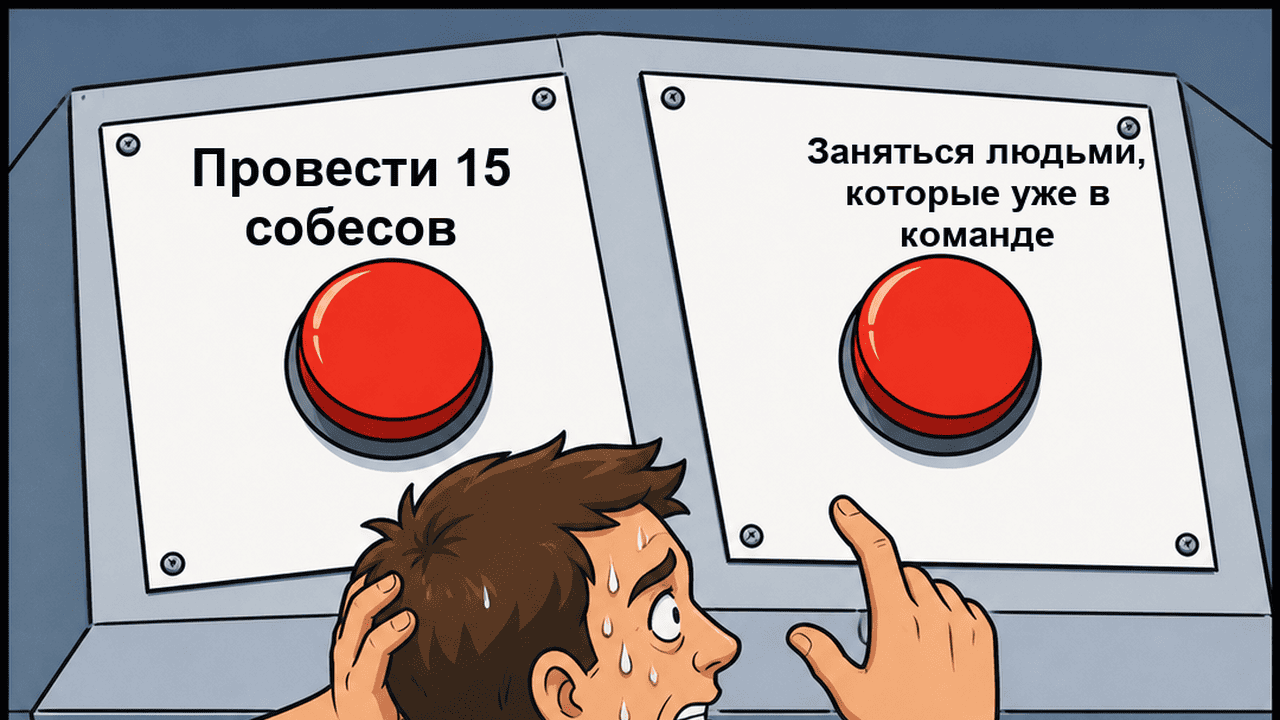
In short: building a corporate culture in a company is not about cookies in the kitchen. It is about people actually caring. And I did not learn this from some clever book — I learned it the hard way, when we nearly lost the team. Let me tell you how it went — honestly, no gloss.
How we raced at full speed without knowing where to
There was a period when everything was flying. Tasks, releases, clients — all fast, dynamic, “it's alive!”. From the outside, a dream, not a company.
But inside — silence. You know the kind, when everyone sits in headphones doing something, but nobody understands why exactly today. Where are we even going? Where do we stand against our goals? Silence.
People were burning out quietly. Not with drama and resignation letters, just fading. Their eyes dimmed, the jokes in the chat dried up, and on Fridays everyone dissolved at exactly 6 p.m., as if they had never been there.
And then a strong developer quietly left us. No scandal, no “let's talk it through”. He just wrote that he had found a place where things were “clearer”. That “clearer” hurt the most — the person left not for money, but for a meaning we did not manage to give him.
We drifted with the current, and HR was always busy. Just not with us
The most frustrating part — there was nowhere to turn for help. You want to talk, to understand what is going on — and there is no one to do it with.
HR? Oh, HR was busy. Very. Interviews, preparing for interviews, paperwork, reports, more interviews. Anything at all — except, well, the people who already work here.
The tech leads? They have their own universe. Code, architecture, deadlines. “Culture? Motivation? Not my thing, that's HR.” And HR was in interviews. The circle closed.
So we drifted. With the current. Not knowing where it was taking us. Spoiler: the current usually carries you somewhere other than where you wanted to go.
Why HR is always busy with the wrong things
Let's be honest. We ourselves drove HR into this trap — me included.
We put the whole of hiring on one person. And hiring these days is not “post a vacancy, pick the best”. It is an avalanche. A single position gets close to a hundred applications, and each one has to be read, filtered, invited, talked to, assessed, written up. Multiply that by several vacancies at once.
As a result, interviews and paperwork eat up the whole of HR's working day. Not because the person is bad or lazy — quite the opposite. But because there is physically not an hour left for the people already on the team.
And here is the paradox I still wince at: we hire HR to be “about people”. And then we give them no time to be about people. Genius, really.
What corporate culture actually is (spoiler: not cookies)
When people say “corporate culture in a company”, many picture a board game in the meeting room and merch with the logo. That's nice. But it is not culture. Those are souvenirs.
Corporate culture is the answer to a simple question: “What is actually going on here and why am I here?” If a person knows where the company is going, sees their place in it and feels noticed — there is culture. If not — no merch will save you.
- people understand the company's goal and their role in it;
- there is someone to talk to when something is wrong — and you are actually heard;
- wins are noticed, not taken for granted;
- feedback flows both ways, not just “top down”.
A bit boring compared to pizza? Maybe. But it works. And, unlike pizza, it does not run out by lunchtime.
Where employee motivation and loyalty really begin
People often ask me how to raise employee motivation and increase their loyalty. Everyone waits for a magic pill. There isn't one. But there are things that really get things moving.
- Tell people where the ship is sailing. Every couple of weeks — in plain words, where we are and what's next. No corporate newspeak. People stick with those who don't lie about the course.
- Give HR time to be with the team. Not with paperwork. With people. One honest one-on-one is worth ten abstract “engagement programmes”.
- Say it out loud. “Thanks, you carried that release” — costs nothing, and works better than half your bonuses.
- Ask, then act. You gathered feedback — show that something changed because of it. Otherwise next time people simply won't answer.
- Remove the routine that eats all of this up. This is the point I have a personal score to settle with.
How to free up HR so they can work with people
Here I'll honestly tell you why we built our product at all. Not to tick a box — out of pain.
When I heard “sorry, I'm in interviews” for the hundredth time, it hit me: the problem is not HR. The problem is that first-round interviews are a conveyor belt that eats person-hours by the wagonload. And those very hours could have gone to the team.
That is how HeadSync came about. Put simply: the platform runs the first voice interview with the candidate right in the browser, asks questions tailored to the role and sends us a proper report — with a transcript, a skills assessment and a recommendation. It also checks integrity: it sees when a candidate is peeking at an AI or at a neighbouring window (and that's all over the place these days).
Rolling it out turned out to be painless: we registered in the dashboard, built an interview for the role, sent the candidate a link — that's it. No months of integration and dancing with a tambourine.
- the first-round screening runs on its own, in parallel and around the clock — HR is no longer stuck on the conveyor;
- we save 1–2 weeks on hiring, and that is not a marketing figure but our reality;
- and most importantly — HR got time back. For people. For those very conversations we were so short of.
And you know what happened? The silence in the company started to dissolve. Not instantly, not by magic. But the person who finally had their hands free for the team did more for the culture in a month than all the cookies did in a year. I wrote in more detail about how this helps the business here.
What we changed at home — a short checklist
If you want specifics, here is what we did to climb out of that swamp:
- HR was drowning in interviews → first-round interviews automated, HR with the team;
- Nobody knew the company's goals → short “where we are and where to” updates every two weeks;
- Wins passed by in silence → we say thank you out loud, in front of everyone;
- Feedback went nowhere → we gathered it and showed what we changed;
- We drifted with the current → at least now we know where we're rowing.
Nothing cosmic. We just stopped pretending culture would appear on its own.
Three mistakes I'm still embarrassed about
Since I'm being candid — here is what we got burned on. Take it for free, so you don't step on the same rake.
Mistake one: I thought culture would grow by itself. As in, we hired good people — it'll sort itself out somehow. It does not. Culture is like a garden: don't water it and it grows over with weeds.
Mistake two: I dumped everything on HR and exhaled. “We do have HR, let them deal with the atmosphere.” And the fact that this HR was drowning in interviews — I sort of failed to notice. Convenient not to notice, right.
Mistake three: I stayed silent about the goals. It seemed to me that everyone already knew where we were going. Spoiler: they did not. What is obvious to a founder is a closely guarded secret to the team, if you don't say it out loud.
If you remember only one thing from this whole text — let it be this: you cannot delegate culture and forget about it. You have to come back to it. Every week.
Frequently asked questions
- Where do I start building a corporate culture if there is no budget?
- With conversations. Seriously. Telling the team about the goals and starting to notice people costs zero. Silence is what costs the most.
- How do I raise the motivation of employees who are already a bit burned out?
- First listen, don't motivate. Often people fade not from the workload but from meaninglessness. Bring back the meaning — “why we do this” — and half the motivation returns on its own.
- Is this an HR task or a manager's task at all?
- Both. Culture is set by the founder and managers through their behaviour, while HR helps it live every day. Dumping it all on HR and walking away — that doesn't work, proven.
- How is hiring automation connected to corporate culture?
- Directly. As long as HR is buried in interviews, they have no time for the team. Take the conveyor off them and hands free up for people. Culture is, among other things, about the free time of the right person.
- Won't the company become “soulless” if you hand interviews to a robot?
- Rather the opposite. The robot takes on the routine, while live interaction — the offer, getting to know each other, support — stays with people. There is only more warmth because of it.
So what's the bottom line
If you recognised your company in this story — breathe out, you are not alone. Almost everyone goes through the “flying fast, don't know where” stage. The only question is whether you notice it in time or when the team has already started quietly drifting apart.
Building a corporate culture in a company is realistic even without a budget and a dream HR department. It all starts simply: free the right person from the routine and let them be with people. The rest will follow.
I talk about this regularly in our Telegram channel — drop by, it's down-to-earth and to the point: @headsynctech. And if you want to take the interview conveyor off HR and give them time back for the team — leave a request, and we'll show you how it works.